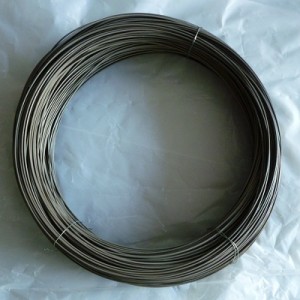
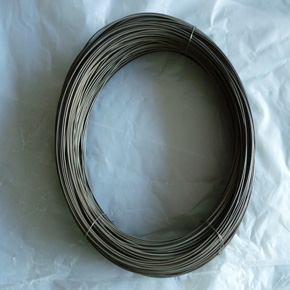
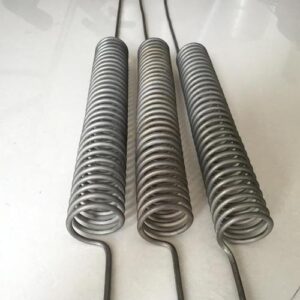
Heanjia Super Metals Co., Ltd. produces the highest quality FeCrAl alloys and Kanthal A1, APM substitutes in China.
To produce premium FeCrAl alloys, we apply dual electroslag smelting technical route: three-phase lined furnace + electroslag remelting. To produce Kanthal A1 and Kanthal APM substitute, we apply powder metallurgy technology and special heat treatment process. Our product has higher purity, better uniformity, and longer material service life than its peer. In comparison, most of the companies in the same industry use medium-frequency furnace smelting, which our company phased out long ago.
FeCrAl alloys for Different Applications:
For application temperatures up to 1250℃: 0Cr23Al5
For application temperatures up to 1300℃: 0Cr25Al5
For application temperatures up to 1350℃:0Cr21Al6Nb
For application temperatures up to 1400℃: HJ209 (Kanthal A1 substitute)
For application temperatures up to 1425℃: HJ407 (Kanthal APM substitute)
Note: we find some suppliers exaggerate the highest working temperature for their FeCrAl alloys. If the FeCrAl alloy were used in higher than recommended temperature, the life span will be significantly shorter.
Technical Specifications of FeCrAl Alloys:
All compositions are nominal weight percent (wt%). Balance is Iron (Fe) and minor/trace elements.
| Alloy | Cr (wt%) | Al (wt%) | Key Additives | Primary Technical Purpose & Differentiation |
| 0Cr23Al5 | 22.0 – 24.0 | 4.5 – 5.5 | Ti, Zr, Y (RE) | Baseline Standard Grade. Optimized for general-purpose heating elements and industrial furnace components. Offers an excellent balance of oxidation resistance, formability, and cost. |
| 0Cr25Al5 | 24.0 – 26.0 | 4.5 – 5.5 | Ti, Zr, Y (RE) | Compared to 0Cr23Al5: Enhanced Oxidation Resistance. Increased Cr content extends service life and stability in cyclic oxidation and slightly corrosive atmospheres. Slightly reduced low-temperature ductility |
| 0Cr21Al6Nb | 20.0 – 22.0 | 5.5 – 6.5 | Nb (~0.5%), Y (RE) | High-Temperature Strength & Sag Resistance. The strategic addition of Niobium (Nb) forms fine carbides/nitrides and promotes a finer grain structure. This significantly improves creep strength and resistance to high-temperature sagging, making it ideal for long, unsupported heating elements or structural members. |
Note on Reactive Elements (RE): All modern FeCrAl grades contain trace additions (typically <0.1%) of Reactive Elements such as Yttrium (Y), Zirconium (Zr), or Hafnium (Hf). These are critical for improving Al₂O₃ scale adhesion under thermal cycling, preventing spallation and dramatically extending component lifespan.
FeCrAl Alloy Comparative Performance Data:
| Property | 0Cr23Al5 | 0Cr25Al5 | 0Cr21Al6Nb | Test Condition / Notes |
| Max. Rec. Temp. (Continuous, Air) | 1250°C | 1300°C | 1350°C | Based on long-term oxidation life. |
| Electrical Resistivity (20°C) | ~1.35 μΩ·m | ~1.38 μΩ·m | ~1.45 μΩ·m | Key for heating element design. |
| Creep Rupture Strength | Medium | Medium | High | Nb-doped grade shows superior lifetime under load at T > 1100°C. |
| Room-Temperature Elongation | ~15% | ~12% | ~10% | As-annealed condition. Formability decreases with Al & Nb content. |
| Scale Adherence (Cyclic Ox.) | Good | Very Good | Excellent | RE and Nb additions enhance cyclic oxidation resistance. |
FeCrAl Alloy Metallurgical & Application Rationale:
0Cr23Al5: The workhorse alloy. Sufficient Al (~5%) forms a stable Al₂O₃ scale, while moderate Cr content provides adequate substrate corrosion resistance and manufacturability. Typical Use: Industrial and commercial furnace heating elements, toasters, kiln components.
0Cr25Al5: An upgrade for more demanding thermal and corrosive service. The increased Cr enhances the alloy’s “reservoir” to support the Al₂O₃ scale and improves base metal resistance to chlorides and other corrodents. Typical Use: High-temperature furnaces (e.g., for ceramics, powder metallurgy), components in chemically challenging heat treatment atmospheres.
0Cr21Al6Nb: An engineering solution for mechanical performance at temperature. While Cr is slightly reduced, Al is increased for maximum scale protection. The critical addition is Niobium (Nb): Forms fine (NbX) precipitates that pin grain boundaries and dislocations, retarding creep deformation. Refines the as-cast and recrystallized grain structure, improving toughness and sag resistance. Synergizes with RE to further improve oxide scale adhesion.
Typical Use: Long, unsupported helical or coiled heating elements in radiant tubes, high-temperature support wires, honeycomb structures for catalysis, and advanced applications like Accident Tolerant Fuel (ATF) cladding in nuclear reactors where high-temperature steam oxidation resistance and strength are paramount.
Summary & Selection Guidance
| Select 0Cr23Al5 if: Your priority is cost-effective performance for standard high-temperature applications with good formability and proven reliability. |
| Select 0Cr25Al5 if: Your application involves severe oxidation, thermal cycling, or mildly corrosive atmospheres where extended lifespan is critical. |
| Select 0Cr21Al6Nb if: The component is under significant load or stress at high temperature, requires minimal sag or deformation, or must meet extreme longevity criteria in the most aggressive thermal environments. |
Disclaimer: This document provides general technical information. Final material selection and design must be validated for the specific application conditions, including temperature profile, atmosphere, mechanical stress, and required service life. Consultation with materials engineers and suppliers is essential.


 +1 206 890 7337
 sales2@super-metals.com