

 sales2@super-metals.com
What to Ask a Kanthal Wire Manufacturer Before Placing a Bulk Order
Bulk purchases of resistance heating wire are different from buying a small quantity for maintenance or prototype work. Once hundreds of kilograms or repeated production lots are involved, any inconsistency in alloy, diameter or resistance multiplies across many furnace elements at once.
For that reason, buyers evaluating a Kanthal wire manufacturer China or another international manufacturing source should interrogate the manufacturing and quality process before issuing a large purchase order. The questions below are about how the wire is made and verified not about price.
What Exact Alloy Will Be Supplied and How Is It Verified?
Start with material identity, then go one step further and ask how it is confirmed. “Kanthal-type wire” and a specific branded grade are not automatically the same, so the purchase order should name the required grade.
For a bulk order, the more revealing question is how the manufacturer verifies that what leaves the line matches that designation composition checks, incoming raw-material control, or batch testing. If an alternative alloy is offered, it must be identified as an alternative, never shipped as the branded grade.
What Documentation Comes With Each Batch?
Ask exactly what paperwork accompanies each production batch. Depending on your requirements, this may cover material identification, chemical composition, dimensions or electrical characteristics.
The value is practical, not bureaucratic: if an element underperforms months later, batch documentation lets maintenance and quality teams establish what was actually installed. For a repeating bulk account, ask whether the documentation format stays consistent from lot to lot, because consistent paperwork is what makes incoming inspection fast.
What Diameter Tolerance Can Be Held in Production?
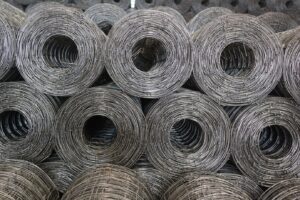
For a bulk run, a nominal diameter is not enough ask for the manufacturing tolerance the line can actually hold across a full order. Ordering “3 mm wire” is incomplete until engineering has stated the acceptable variation for the element design.
Establish the tolerance requirement before procurement compares quotations, and ask how the manufacturer monitors diameter through a long production run, not only at the start of it.
How Is Electrical Resistance Checked?
Resistance heating elements are designed around electrical parameters, so ask how the manufacturer controls and checks resistance.
For a bulk order, clarify whether resistance data is provided per coil, per batch, or under another agreed inspection arrangement, and how out-of-range material is caught before it ships. A manufacturer that can describe its resistance-checking method clearly is far easier to hold to a specification than one that treats resistance as a nominal figure.
How Many Production Lots Will the Order Cover?
This becomes more important as volume grows. If 1,000 kg is ordered, will it come from a single production lot or several? If multiple lots are involved, ask how each is identified.
The answer directly affects how you plan incoming inspection, since several lots may need several checks. Knowing the lot structure up front prevents surprises when the material arrives.
How Will Lots Be Labelled for Traceability?
For a bulk order, labelling is a traceability tool. Ask whether each unit carries a lot or batch reference that ties back to its production and test records.
Similar wire grades can be almost impossible to tell apart by eye, so warehouse and quality teams need to distinguish lots without opening packaging or relying on appearance. Clear lot identification is what keeps traceability intact once the wire is in stores.
Can a Pre-Production Sample Be Qualified First?
For a manufacturer you have not used before, committing to the full bulk order immediately adds avoidable risk. A sample or small qualification lot lets engineering and quality confirm dimensions, handling and documentation against measurable requirements before the large purchase.
Base the qualification on data measured diameter, verified resistance, checked paperwork rather than on visual impression alone.
How Are Non-Conforming Lots Handled?
No bulk purchasing process should assume every shipment will be perfect. Ask, before the order, how the manufacturer handles dimensional deviations, incorrect documentation or other quality issues once material has shipped.
A supplier with a clear corrective-action process is a good sign: it shows both sides understand what happens if a lot does not meet the agreed specification. The absence of any such process is itself an answer.
Conclusion
A bulk wire order should begin with questions about how the material is made and verified not simply a request for the lowest quotation. Confirm how alloy identity, tolerance and resistance are controlled, what documentation and lot identification accompany each batch, how a sample can be qualified first, and how non-conforming material is handled. A thorough qualification takes time before the first order, but it removes uncertainty once the wire becomes part of regular furnace production.