

 sales2@super-metals.com
How to Choose the Right FeCrAl Alloy for an Industrial Heating Element
Choosing a resistance alloy is one of the most important decisions when designing an electric heating element. Iron-chromium-aluminium, or FeCrAl, alloys remain the default choice for resistance heating precisely because no other common material matches their combination of electrical resistance and resistance to scaling at high temperature. FeCrAl is a family of materials rather than a single grade, and individual alloys have different temperature limits and electrical properties, covered in detail in our alloy-specification guidance.
Rather than listing every relevant factor for FeCrAl Alloy Heating Elements side by side, this article sets out the order in which those decisions are best made, since deciding them in the wrong sequence is a common source of rework.
Decide the Real Element Temperature First, Not Last
The furnace set temperature is often the first number a buyer has in hand, but it should not be the first number used to select an alloy. The element itself normally operates hotter than the furnace chamber, with the difference influenced by element design and heat-transfer conditions. Deciding on an alloy grade before estimating the actual element temperature is the single most common ordering mistake in this category, because it can lead to a grade that looks adequate on paper but runs close to its limit in practice.
Establish the expected element temperature, with a reasonable safety margin, before comparing alloy grades against it.
Only Then Compare Resistivity Between Candidate Grades
Once the temperature requirement has narrowed the field to one or two suitable grades, resistivity becomes the next decision point, because it determines how much conductor is required to achieve a particular electrical resistance. If an engineer substitutes one alloy for another without recalculating the element, the existing wire length may no longer produce the intended resistance.
Resistivity differences between candidate grades are usually modest compared with the temperature-rating differences that eliminated other grades in the first step, which is why this belongs second in the sequence rather than first.
Set Wire Diameter From the Design, Not From Habit
Wire diameter should be calculated from the resistance and length requirement established in the previous steps, not carried over from whatever diameter was used on a previous project. For the same alloy, thinner wire has higher resistance per unit length because its cross-sectional area is smaller, while thicker wire requires more length to achieve the same resistance but provides more surface area and, generally, longer service life at a given temperature.
The smallest wire that produces the required resistance is not automatically the best choice once surface loading, covered next, is taken into account.
Check Surface Loading Before Finalising the Design
Surface loading, the power distributed across the element’s surface, should be checked once wire diameter and element length are provisionally set, not before, since it depends on both. Higher surface loading can increase element temperature, particularly when heat dissipation is limited, and ambient temperature, neighbouring elements and heat-transfer conditions all influence how much surface load can be used safely.
This is where a design that passed the temperature and resistivity checks can still need revision, particularly in compact equipment where there is a temptation to fit high power into limited space.
Confirm Atmosphere Last, Because It Changes the Margin, Not the Grade
Furnace atmosphere is often treated as a starting question, but it is more useful as a final check on the margin built into the earlier decisions, since it rarely changes which alloy family is appropriate on its own. FeCrAl alloys develop an aluminium-oxide surface layer that provides protection against high-temperature oxidation, and contaminants such as oil, dust, volatile substances and carbon deposits can still shorten element life regardless of which grade is chosen.
If the atmosphere is known to be contaminated or aggressive, this is the point to add extra margin to the temperature and surface-loading decisions made earlier, rather than reopening the alloy-grade decision from scratch.
Match Geometry and Duty Cycle to the Finished Design
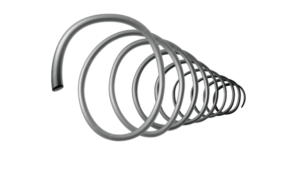
With temperature, resistivity, diameter, surface loading and atmosphere margin settled, element geometry, wire, ribbon or strip, and duty cycle become the final fitting exercise rather than open decisions. An open spiral coil and a large corrugated strip element may experience very different mechanical and thermal conditions even when both operate in the same furnace-temperature range, and a continuously operating furnace may tolerate a tighter design than equipment that heats and cools repeatedly.
Providing this realistic operating information to the supplier at this stage, rather than earlier, avoids relitigating decisions that were already settled in the steps above.
Verify Against the Actual Supplier’s Data Before Ordering
Generic FeCrAl materials should be evaluated using the actual manufacturer’s technical datasheet, since published values for one branded alloy should not automatically be applied to a different manufacturer’s grade. Before approving a substitution, verify composition, resistivity, maximum recommended temperature, dimensional tolerances and electrical resistance against that specific supplier’s own data.
Conclusion
Choosing an FeCrAl alloy goes more smoothly when the decisions are made in sequence rather than all at once: actual element temperature first, resistivity second, wire diameter and surface loading together next, atmosphere as a margin check, and geometry and duty cycle as the final fit.
Working through the decision in this order reduces the number of times a design has to be reopened after a later factor reveals that an earlier choice no longer holds.